What Is Past Life Regression or Past Life Reading?
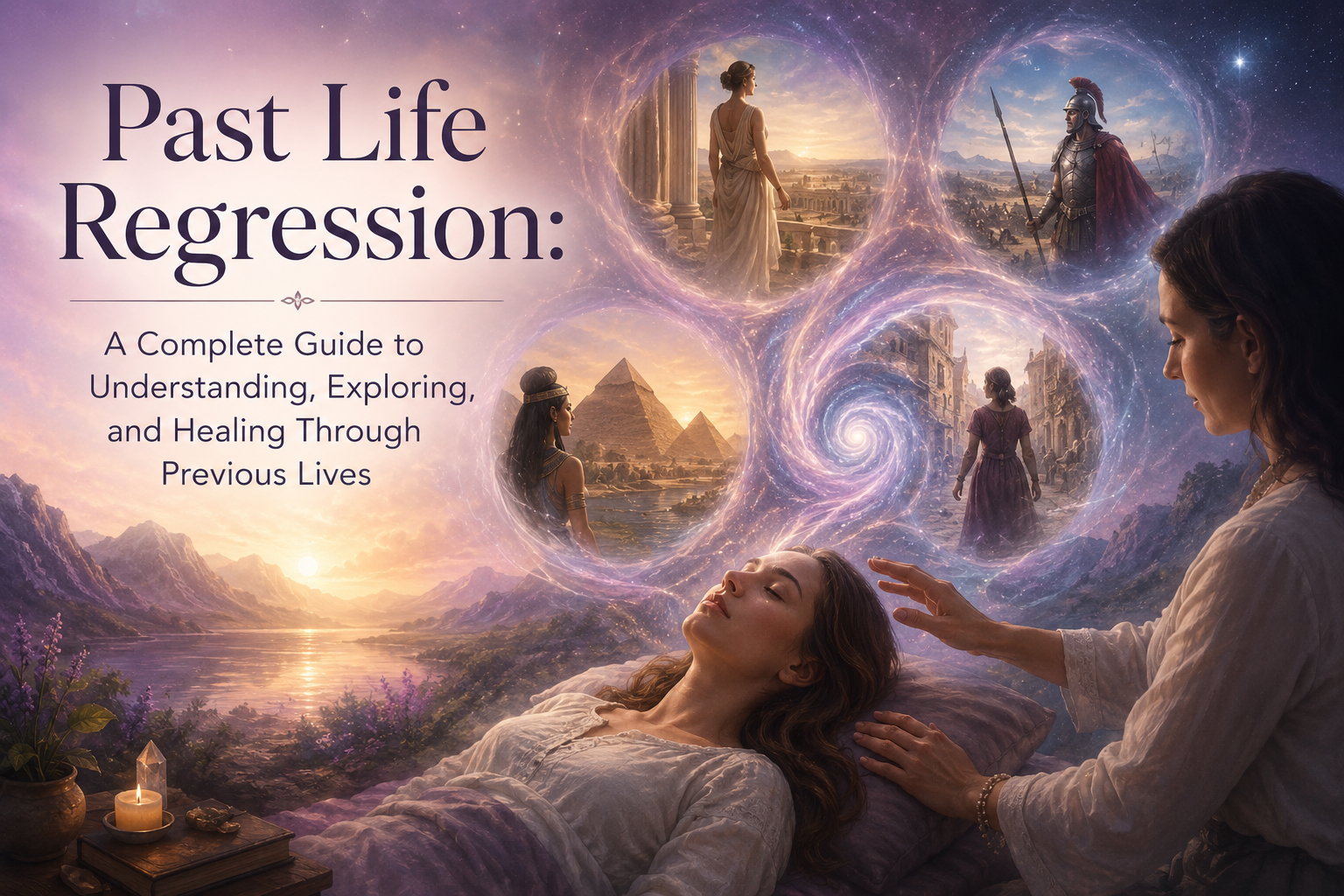
Past life regression is a therapeutic and spiritual practice that uses hypnosis or guided meditation to help a person access memories believed to originate from previous lives. Whether someone approaches it from a spiritual standpoint rooted in reincarnation, or simply as a tool for psychological healing, this practice has captured the curiosity of many people around the world. At its core, past life regression invites individuals to journey inward beyond the boundaries of their current life to explore the stories, relationships, and experiences their soul may have carried across lifetimes.
A past life reading, on the other hand, typically involves a psychic or intuitive practitioner who reads the energy or soul history of a person without putting them into a formal hypnotic state. Both approaches aim to uncover patterns, unresolved trauma, personality traits, and emotional blocks that may be influencing the present life. While the methods differ, the underlying intention is the same: to understand who a person has been in order to better understand who they are now.
The concept is deeply tied to the belief in reincarnation the idea that the soul is eternal and cycles through multiple bodies and lifetimes to learn, grow, and evolve. Many cultures and spiritual traditions, from Eastern philosophy to certain Western metaphysical schools, have embraced this worldview for thousands of years. For those within or outside of religious frameworks, past life work offers a fascinating lens through which to examine the subconscious mind.
How Does Past Life Regression Work?
The process of past life regression typically begins with a conversation between the practitioner and the client. This initial discussion helps the therapist understand the person‘s goals, concerns, and any specific areas of their current life they wish to explore whether it be anxiety, relationship struggles, physical symptoms, or simply a deep curiosity about their soul‘s history.
Once that foundation is established, the therapist or hypnotherapist guides the subject into a deeply relaxed, trance-like state using hypnosis or a structured meditation system. In this altered state of awareness, the conscious mind quiets down and the subconscious mind becomes more accessible. It is within this space that memories whether real, symbolic, or metaphorical begin to surface.
During the session, the hypnotherapist gently asks questions to help the person navigate the images, feelings, and details that arise. They may ask about the surroundings, the time period, relationships, and key events in what appears to be a past life experience. The role of the practitioner is not to lead or suggest, but to facilitate creating a safe and supportive environment where the person can explore freely.
Interestingly, many subjects report vivid and emotionally charged experiences during hypnotic regression. Some describe detailed scenes landscapes, clothing, language, and interpersonal dynamics that feel profoundly real. Others access more abstract impressions or feelings that still carry significant emotional weight. The way each person experiences regression varies widely depending on their level of suggestibility, their relationship with the subconscious mind, and their openness to the process.
After the session, the therapist helps the person integrate what they have experienced, drawing connections between the past life memories and the patterns or challenges present in their current life. This is where the real healing begins.
What Happens When You Do a Past Life Regression?
For those wondering what actually unfolds during a past life regression, the experience is often described as deeply immersive somewhere between a vivid dream and a waking vision. Most sessions take place in a private, comfortable setting, either in person or remotely, and typically last anywhere from one to three hours.
Once in the trance state, the person may begin to receive images, sensations, emotions, or even spoken words that feel connected to another time and place. Some subjects immediately recognise details from a historical period the clothing they wear, the home they live in, or the relationships they hold. Others receive fragmented impressions that gradually piece together into a coherent narrative as the session continues.
A key feature of these sessions is the emotional release they often provoke. When a person revisits a traumatic experience from a past life, they may feel the weight of old grief, fear, or anger surfacing. But under the care of a skilled therapist, this emotional release becomes a powerful moment of healing. Rather than re-traumatising the individual, the regression process allows them to observe and release old wounds from a place of safety.
It is also common for people to experience what is known as a life review a reflective moment at the end of a past life where the soul processes what it has learned. This review often carries profound insights that feel directly relevant to the person‘s present life challenges, offering clarity around recurring relationship patterns, fears, or physical symptoms that have no obvious origin in this lifetime.
After the session ends and the hypnotherapist gently brings the person back to full awareness, most individuals feel a sense of calm, wonder, or emotional lightness. Many report that the experience feels more real and emotionally significant than an ordinary dream, even hours or days later.
What Are Signs You Lived a Past Life?
Many people begin exploring past life work not because they sought it out, but because certain unexplained aspects of their life led them there. There are several commonly reported signs that are believed to suggest a connection to previous lives, and while none of these are scientifically verified, they are worth exploring with an open mind.
Unexplained Fears and Phobias
One of the most widely discussed signs is the presence of intense fears or phobias that have no clear cause in the person‘s early years or current life history. A fear of deep water, for example, with no traumatic memory to explain it, might prompt some people to wonder whether it stems from a drowning in a previous life.
Recurring Dreams and Vivid Memories
Recurring dreams set in historical time periods or unfamiliar places are often cited as potential echoes of past life memories. These are not ordinary dreams but persistent, emotionally charged experiences that leave the person with a lingering sense of familiarity as if they are remembering rather than imagining.
Immediate Connections and Inexplicable Aversions
Meeting someone for the first time and feeling an instant, inexplicable bond or conversely, an immediate and irrational dislike is another sign some associate with soul-level history. These intense interpersonal reactions are thought to reflect unresolved events or deep emotional ties carried across lifetimes.
Unexplained Physical Symptoms
Physical symptoms that have no medical explanation, such as chronic pain in a specific area of the body, are sometimes explored through regression therapy. The theory is that the body carries imprints of trauma from past lives, which can manifest as unexplained physical discomfort in the present life.
A Sense of an Old Soul
Some people feel from a very young age that they carry a wisdom or sense of world-weariness that seems out of place given their age and life experience. This feeling of being an ‘old soul‘ is often connected to the belief that the soul has lived many times and carries the weight of accumulated experiences.
Strong Affinity for Specific Cultures or Eras
A deep, unexplained affinity for a particular historical era, culture, or country especially one that feels more like home than the person‘s actual birthplace is frequently mentioned as a possible indicator of a past life connection.
How Can I Do a Past Life Regression on Myself?
Self-guided past life regression is entirely possible, and many people have had meaningful experiences through personal practice. However, it requires patience, an open mind, and some preparation. It is important to note that self-directed exploration lacks the professional guidance and safety net that a trained practitioner provides so for those with a history of trauma or mental health conditions, working with a qualified hypnotherapist is strongly recommended first.
Create a Quiet, Sacred Space
The first step is to find a quiet, comfortable space where there will be no interruptions. Dimming the lights, playing soft ambient music, and perhaps incorporating elements of sacred geometry or meaningful objects can help set the tone for a focused inner journey.
Use a Guided Meditation
There are many audio recordings and guided meditation programmes available that are specifically designed for past life regression. A well-crafted meditation system can walk a person through progressive relaxation, deepening their state of awareness before gently inviting the subconscious mind to reveal past life impressions. Meditation peace a calm, receptive internal state is the foundation for any meaningful self-regression.
Set a Clear Intention
Before beginning, it helps to set a clear intention. Rather than simply asking to see a past life, it is more effective to frame the experience around a specific question such as what relationship pattern, fear, or area of personal growth one wishes to explore. This helps focus the subconscious mind and makes the experience more relevant to the present life.
Journal the Experience
After the session, writing down every detail images, emotions, people, time periods, and any questions that arose is a valuable next step. The subconscious mind sometimes delivers information in layers, and revisiting the notes over the following days may reveal additional meaning or connections.
Consider Eye Movement Therapy
Some people combine self-exploration with eye movement therapy techniques to help process the emotional content that arises. This approach can be particularly helpful for integrating past life experiences that surface strong emotional responses.
How Accurate Is Past Life Regression?
This is perhaps the most frequently asked and most hotly debated question surrounding past life regression. The answer depends heavily on the lens through which one approaches the practice scientific, psychological, or spiritual.
From a scientific perspective, the research on past life regression is inconclusive and frequently contested. Critics point to the phenomenon of false memories a well-documented psychological occurrence where the brain constructs detailed but inaccurate recollections under the influence of hypnosis. The work of researchers in the field of memory science has shown that the hypnotic state can increase suggestibility, making subjects more likely to accept and elaborate on information provided whether intentionally or inadvertently by the hypnotherapist.
One of the most famous cases in the history of past life regression is the Bridey Murphy case. In the early 1950s, a Colorado housewife named Virginia Tighe was hypnotised by Morey Bernstein, an amateur hypnotist, and appeared to recall detailed memories of a 19th-century Irish woman named Bridey Murphy. The story captured enormous public attention and was documented in a widely read book. However, subsequent psychical research and investigation revealed inconsistencies and plausible explanations rooted in source amnesia the tendency of the brain to forget the origin of information it has previously encountered, which can lead to source misattribution when that information resurfaces under hypnosis.
The Bridey Murphy case brought the concept of recovered memories and the risks of hypnotic regression into mainstream awareness. Mental health professionals continue to debate the reliability of memories retrieved under hypnosis, with many pointing to the risk that hypnotically recovered memories may reflect a blend of actual memories, imagination, and suggestion rather than verifiable historical facts.
That said, many practitioners and subjects argue that the accuracy of past life regression should not be judged solely by its historical verifiability. From a therapeutic standpoint, the value of the experience lies not in whether every detail can be confirmed, but in the insight, emotional relief, and healing it provides. Even if the images that arise are understood as symbolic rather than literal as expressions of the subconscious mind rather than actual memories of previous lives they can still illuminate deep psychological patterns and facilitate genuine healing.
How Can I Know Who I Was in My Past Life?
Many people are drawn to past life exploration with a very personal question at the centre: Who was I? This question is both compelling and challenging to answer with certainty, and the path to exploring it is best approached with a spirit of curiosity rather than a need for definitive proof.
Working with a skilled hypnotherapist or practitioner is the most structured way to access this kind of information. During regression sessions, specific questions are used to draw out details about the historical period, geographic location, occupation, relationships, and key life events of the person being explored. Over the course of several sessions, a richer picture can begin to emerge.
For those interested in a more intuitive route, psychic readings offer another way in. A psychic who specialises in past life work can often access what they describe as the akashic record a spiritual concept referring to a kind of universal library of all soul experiences. While this approach is outside the scope of conventional therapy, many people find that psychic readings provide surprisingly personal and resonant insights into their soul‘s history.
It is worth noting that the details accessed through regression names, places, dates are not always historically verifiable. In some cases, subjects have reported details that seem to check out; in others, the information is too vague or too specific to confirm. Whether approached as genuine memory, creative expression of the subconscious, or something in between, the exploration itself tends to be deeply meaningful.
Ultimately, knowing who one was in a past life may be less about pinpointing a specific historical identity and more about recognising the emotional and spiritual threads that connect the soul‘s journey across time. The patterns, relationships, and themes that emerge are often more instructive than the biographical details.
How Much Does a Past Life Regression Session Cost?
The cost of a past life regression session can vary considerably depending on the location, the experience and training of the practitioner, and the format of the session. In major cities such as New York or London, sessions with highly sought-after practitioners can range from £100 to £400 or more per hour. In smaller markets or for practitioners with less extensive training, the cost may be considerably lower.
Some practitioners offer a hypnotherapy care package that bundles several sessions together at a reduced overall rate. This can be a practical option for those who wish to work through a specific issue over the course of multiple sessions rather than in a single sitting. A care package approach also allows the work to deepen over time, which many practitioners and clients find more therapeutically effective.
Group sessions are another more affordable option. Some hypnotherapists run group regression events where a number of participants are guided through the experience simultaneously. While the group setting lacks the personalised attention of a one-on-one session, many people find it a valuable introduction to the work and a meaningful way to connect with a community of like-minded individuals.
Online sessions have become increasingly popular and often come at a lower price point than in-person work. Many skilled practitioners now offer remote sessions that are reported to be just as effective as face-to-face appointments, making this work more accessible regardless of geographic location.
Before booking a session, it is always advisable to research the practitioner‘s background, training, and reputation. Look for someone who has completed proper hypnotherapy training and who approaches the work with both professional competence and genuine care for the wellbeing of their clients.
What Is the Quantum Healing Hypnosis Technique (QHHT)?
Quantum Healing Hypnosis Technique, widely known as QHHT, is a specific method of hypnotic regression developed by the late author and hypnotherapist Dolores Cannon over decades of practice. It represents one of the most well-known and structured approaches to past life regression available today, with practitioners trained across the world through a dedicated education group and formal certification process.
QHHT sessions are distinctive in their depth and scope. Unlike a standard past life regression session, which might explore one or two lifetimes, a QHHT session typically involves an extended journey through multiple past life experiences before arriving at what Cannon termed the subconscious a higher level of consciousness that, according to the technique’s framework, holds answers to the subject’s most pressing life questions and is also capable of facilitating physical and emotional healing.
The technique involves guiding the subject into the deepest possible level of trance the somnambulistic state which is not commonly reached in ordinary hypnotherapy. In this state, the subconscious mind is believed to speak directly and can provide extraordinarily detailed responses to questions about health, relationships, purpose, and soul history.
QHHT has attracted both devoted practitioners and sceptical critics. Those who have experienced it often describe it as the most profound healing experience of their lives. Critics, however, raise concerns about the reliability of the information accessed, the potential for false memories to be generated, and the risk of source misattribution in deeply hypnotised subjects with high levels of suggestibility.
For those drawn to this approach, it is important to work only with practitioners who have completed the formal QHHT training and are listed through the official education group. The next enrollment periods for QHHT training are regularly updated on the official practitioner website, and the executive director of the organisation continues to oversee the integrity and development of the programme.
Is Regression Therapy Helpful?
For many people, the answer to this question is a resounding yes though the reasons for its helpfulness are understood differently depending on the framework one uses to interpret the experience. Regression therapy, whether focused on early years of the current life or on previous lives altogether, is used by practitioners around the world as a complement to more conventional approaches to mental and emotional healing.
One of the primary ways regression therapy tends to be helpful is in providing insight. When someone can see — even symbolically — the origin of a pattern, a fear, or a relationship dynamic, it creates a shift in perspective. Suddenly, something that felt inexplicable or overwhelming begins to make sense in a broader context. This sense of understanding is itself deeply therapeutic.
Regression therapy is also valued for the emotional processing it facilitates. Many people carry unresolved feelings grief, guilt, anger, shame that they cannot trace to any specific cause in their present life. Through regression, these emotions can be revisited and released in a safe, supported environment. This kind of emotional relief can be profound, and its effects often extend into daily life, improving relationships, reducing anxiety, and shifting long-standing depression.
Interpersonal hypnotherapy is a related approach that specifically uses past life regression as a tool for healing relational patterns. By exploring the soul-level history between two people, this form of therapy aims to resolve deep-seated conflict, grief, or attachment that may be playing out in the current relationship. Many practitioners who use this method report powerful breakthroughs in clients who had previously found little relief through other therapeutic modalities.
That said, regression therapy is not a magic cure, and its effectiveness is highly dependent on the skill and ethics of the practitioner, the openness of the subject, and the integration work done between and after sessions. It is best understood as one tool among many in the broader landscape of healing and personal growth.
Is Regression Therapy Dangerous?
This is an important question, and one that deserves an honest, balanced answer. For most people in reasonably good mental health, regression therapy when facilitated by a qualified and ethical practitioner is considered safe. However, there are certain situations and populations for whom the practice carries genuine risks, and these should be taken seriously.
The most commonly cited risk is the potential for generating or reinforcing false memories. When a person enters the deeply relaxed and open state induced by hypnosis, their suggestibility increases significantly. A careless or leading hypnotherapist can whether intentionally or not influence the content of what the subject experiences. These implanted or embellished memories can feel just as real and emotionally charged as genuine recollections, and can cause confusion, distress, or even lasting psychological harm if they are mistaken for literal truth. Source amnesia and misattribution are real cognitive phenomena that practitioners must be mindful of in their approach.
For individuals with certain mental health conditions such as psychosis, severe dissociation, or a history of complex trauma regression therapy can carry heightened risk. The altered state of hypnosis may exacerbate symptoms or cause the person to become overwhelmed by the emotional material that surfaces. It is essential that anyone with significant mental health history consult with their primary mental health care provider before undertaking regression therapy of any kind.
Additionally, while traumatic experiences from a past life are believed by practitioners to lose their power through the regression process, not all subjects are emotionally prepared for what they encounter. Revisiting traumatic events even those framed as past life memories can be distressing, and the subject needs to feel completely safe and supported throughout. A skilled practitioner will always prioritise the wellbeing of the person above the agenda of the session, and will have clear protocols in place for managing difficult emotional moments.
In summary, regression therapy is not inherently dangerous for healthy individuals working with properly trained practitioners. But it is not without risk, particularly for vulnerable populations or when conducted by those without adequate training and ethical awareness.
Is Past Life Regression Therapy Ethical?
The ethical dimensions of past life regression therapy are multifaceted, and they are taken seriously within the professional community. At the heart of the ethical debate is the question of what is actually happening during these sessions and what practitioners are responsible for communicating to their clients.
One key ethical concern centres on informed consent and accurate representation. A responsible practitioner will be transparent with clients about the nature of the work what is known scientifically, what remains speculative, and what the experience may involve emotionally. Presenting past life regression as a method that will provide verified historical facts about who someone was in a past life would be misleading. Ethical practitioners are clear that the memories accessed may be actual memories, symbolic representations generated by the subconscious mind, or some combination of both and that distinguishing between these possibilities with certainty is not always possible.
Another ethical consideration concerns the risk of dependency. Some people, particularly those who are emotionally vulnerable, may become overly reliant on sessions with a practitioner seeking external validation or direction for every life decision rather than developing their own inner resources. An ethical therapist will actively support their clients in building autonomy and personal agency, rather than fostering unhealthy reliance.
The practitioner‘s responsibility to avoid leading questions is also a central ethical concern. Given the high suggestibility of subjects in a hypnotic trance, the therapist must take great care not to introduce information or impressions that could distort the subject’s experience. The risk of source misattribution where information previously encountered (perhaps through books, films, or cultural narratives) is unconsciously incorporated into the regression is real and must be actively guarded against.
Finally, there is the question of scope of practice. Regression therapy, including past life work, should never be presented as a substitute for conventional medical or psychiatric care. Practitioners have a clear ethical responsibility to recognise the boundaries of their role and to refer clients to appropriate medical or mental health care providers when needed. This is especially true when clients present with complex mental health conditions or when physical symptoms arise that require proper medical attention.
5 Ways in Which Past Life Regression Can Benefit You
1. Healing Deep-Seated Trauma
One of the most compelling reasons people seek out past life regression is the hope of healing trauma that feels impossible to trace within their current life history. Many individuals carry the weight of grief, fear, or psychological pain that has no clear origin in the experiences of this lifetime. Regression therapy offers a framework through which this unresolved emotional material can be safely explored and released. By revisiting the traumatic experiences of a past life under the careful guidance of a skilled therapist many subjects report experiencing genuine relief and emotional resolution that had previously eluded them.
2. Understanding Relationship Patterns
Human relationships are complex, and many people find themselves repeating the same painful dynamics across different partners, friendships, or family configurations seemingly unable to break the cycle despite their best efforts. Past life work can shed light on these persistent patterns by revealing the soul-level history between individuals. Understanding that a difficult relationship may be rooted in unfinished business from a previous life can shift the dynamic from frustration and confusion to compassion and resolution. This is also a core application of interpersonal hypnotherapy.
3. Accelerating Personal Growth
For those on a path of deliberate personal growth, past life regression offers a unique kind of depth work. It invites a person to look beyond the surface of their current life circumstances and into the broader arc of their soul‘s evolution. The insights gained through regression can accelerate self-understanding in meaningful ways bringing greater clarity around life purpose, repeated themes, and the lessons the soul seems to be working through across lifetimes. Many people report that a single well-facilitated session produces more meaningful insight than months of conventional therapy.
4. Alleviating Anxiety and Depression
Anxiety and depression are among the most common reasons people seek therapeutic help, and regression therapy is sometimes used as a complementary approach when conventional treatments have provided only partial relief. Some practitioners and subjects report that accessing and resolving the root cause of anxiety especially when that cause appears to originate in a traumatic past life experience can lead to a significant and lasting reduction in symptoms. While regression therapy is not a replacement for evidence-based treatment, it can be a meaningful supplement for those seeking a more holistic approach to healing.
5. Deepening Spiritual Connection
Beyond the psychological benefits, many people find that past life regression deepens their sense of spiritual connection and meaning. Exploring the history of the soul — the relationships, choices, and experiences that have shaped its journey can cultivate a profound sense of continuity, purpose, and belonging. For those who have always felt a strong sense of spiritual curiosity, regression therapy can serve as a doorway into a richer understanding of the self and the cosmos. Whether the experiences accessed are understood as literal memories of previous lives or as symbolic expressions of the soul‘s deeper wisdom, they consistently offer a sense of wonder and expanded perspective that many people find transformative.
A Final Word
Past life regression continues to occupy a fascinating and sometimes controversial space at the intersection of psychology, spirituality, and healing. Whether approached through the structured framework of QHHT, the focused work of interpersonal hypnotherapy, a personalised session with a hypnotherapist, or even a self-guided meditation, the practice offers a rich and often transformative experience for those who come to it with an open heart and a genuine willingness to look inward.
For those considering embarking on this journey, the most important first step is to find a qualified, ethical practitioner whose training and approach align with their needs and values. Asking thoughtful questions, setting clear intentions, and approaching the work as part of a broader commitment to personal growth and healing rather than seeking quick answers or miraculous fixes will serve any seeker well. Whatever the subconscious mind chooses to reveal, the journey itself is rarely without meaning.